

When you submit a health insurance claim after hospitalisation, the insurer may ask for indoor case papers to verify the treatment you received. These records contain details of your hospital stay, including the doctor’s notes, diagnosis, treatment provided and your medical progress during admission. If the hospital does not provide these records or some pages are missing, your reimbursement claim may face delays or even rejection.
However, missing indoor case papers do not automatically mean you have lost your right to challenge the insurer’s decision. The next step is to understand exactly which records are required, request them from the hospital and check the reason stated in the claim rejection letter.
Here is how you can obtain indoor case papers, respond to the insurer or TPA, and take further action if your health insurance claim has already been rejected.
What Are Indoor Case Papers in a Health Insurance Claim?

Indoor case papers are records maintained by a hospital during a patient’s admission. They document aspects of the patient’s care from admission through treatment and, in many cases, discharge.
These records may also be called inpatient case papers, indoor patient records, inpatient case sheets or inpatient medical records. The exact terminology can differ between hospitals and insurers.
Depending on the hospital and the treatment, indoor case papers may include:
- Initial assessment and admission notes
- Medical history recorded during hospitalization
- Doctors’ progress notes
- Nursing notes and observations
- Medication and treatment records
- Vital signs and monitoring charts
- Relevant investigation reports or references to test results
- Instructions and treatment plans recorded during the stay
- Specialist consultation notes, where applicable
- Other inpatient records relevant to the treatment
Not every hospital uses the same format, and not every claim requires every type of record. The insurer’s request and the documents maintained by the hospital will determine what is relevant.
For example, an insurer reviewing a surgery claim may need more detailed records to understand the treatment provided than it would need for a straightforward claim with complete supporting documents.
Why Does the Insurer Ask for Indoor Case Papers?
When assessing a claim, the insurer needs to determine whether the treatment and expenses are covered under the policy. A discharge summary and final bill provide important information, but they may not answer every question about the hospital stay.
Indoor case papers can help the insurer understand what happened during hospitalization and compare the medical information with the claim form, discharge summary and bills.
An insurer or TPA may request these records for reasons such as:
- Clarifying the treatment: The insurer may need more details about the treatment given during admission.
- Checking the medical history: The records may help clarify information about the patient’s condition before or during hospitalization.
- Reviewing a surgery claim: Additional records may be requested to understand the procedure and related treatment.
- Resolving discrepancies: The insurer may need clarification if the claim form, hospital bill and medical documents do not appear consistent.
- Completing a claim investigation: The insurer may request relevant inpatient records when further verification is necessary.
Some insurer policy documents specifically list indoor case papers among the documents that may be required for claim assessment. The exact requirement depends on the policy and circumstances of the claim. You can see an example in this health insurance policy document hosted by IRDAI.
Indoor Case Papers vs Discharge Summary vs OT Notes
These three terms can be confusing because they all relate to medical treatment. However, they do not mean exactly the same thing.
| Document | What it generally contains | Why it may be needed |
|---|---|---|
| Indoor case papers | Records of the patient’s condition, observations and treatment during the hospital stay. | To clarify the course of treatment and medical details. |
| Discharge summary | A summary of the admission, diagnosis, treatment, discharge condition and follow-up advice. | To understand the overall hospitalization and treatment. |
| Operation Theatre (OT) notes | Records of the operation or surgical procedure, where applicable. | To clarify the details of a surgery when relevant to the claim. |
These documents may support one another, but they are not automatically interchangeable. If the insurer specifically asks for indoor case papers, do not assume that sending only the discharge summary will satisfy the request.
If the insurer is asking for a discharge summary instead, read our guide on Health Insurance Claim Rejected Due to Missing Discharge Summary, if this matches the published URL on your website.
For surgery-related documentation, you can also read Health Insurance Claim Rejected Due to Missing Operation Theatre Records, after confirming the exact permalink in WordPress.
Can a Health Insurance Claim Be Rejected Due to Missing Indoor Case Papers?
It is possible for missing records to affect claim assessment, but a missing document should not automatically be treated as proof that every claim is invalid.
The insurer needs to consider the applicable policy terms, the nature of the claim, the documents already submitted and the information needed to make a decision.
For example, if indoor case papers are specifically requested to clarify a medical issue and the information remains unavailable, the insurer may have difficulty completing its assessment. What happens next depends on the circumstances and the applicable policy conditions.
If you receive a rejection letter, check whether it explains:
- Which indoor case papers were required
- Why those records were relevant to the claim
- Whether you were previously asked to submit them
- Whether the hospital records already provided were considered
- Which policy condition the insurer relied on for its decision
If the insurer has not clearly explained the problem, ask for a detailed written reason and the relevant policy clause. This will help you decide whether you need to obtain additional documents, correct an inconsistency or challenge the decision.
If your claim status shows that additional information is needed, our article on Health Insurance Claim Status Showing “Query Raised” may help you understand what to do next.
How to Get Indoor Case Papers From the Hospital
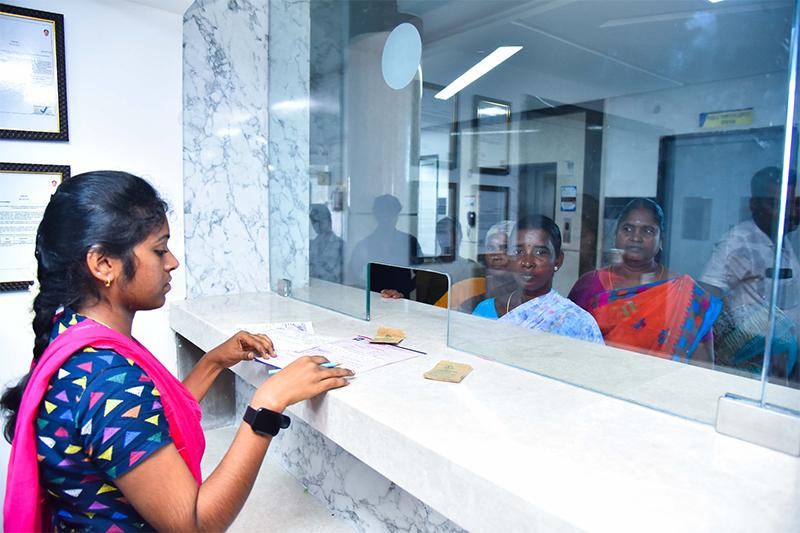
If you have already been discharged, the first place to contact is usually the hospital’s medical records department. If the hospital does not have a separate department, ask the hospital administration or medical superintendent where inpatient records can be requested.
Here is a practical way to approach the process.
1. Ask for the exact records you need
Tell the hospital that your health insurer or TPA has requested indoor case papers for a particular hospitalization.
Provide the patient’s name, hospital registration number or admission number, dates of admission and discharge, and any other details the hospital requires to locate the file.
If the insurer has specified nursing notes, doctors’ progress notes, monitoring charts or another particular record, mention that clearly. A general request for “all medical documents” may not be sufficient if the insurer is waiting for a specific record.
2. Submit the hospital’s record request form
Some hospitals require a written application or a medical-records request form. They may ask for identification, proof of relationship when someone is collecting records for another patient, or an authorization from the patient.
Follow the hospital’s process and ask whether the copies need to be signed, stamped or certified by an authorized hospital representative.
3. Ask for copies in the format the insurer accepts
Check with your insurer whether clear scanned copies are sufficient or whether it requires physical copies, hospital-attested records or a particular submission method.
Do not assume that an ordinary photograph of the documents will always be accepted. If you are submitting files online, make sure the pages are complete, readable and uploaded through the insurer’s official channel.
4. Keep proof of your request
Save the application, acknowledgement, email or other confirmation showing that you requested the indoor case papers.
If the hospital needs time to retrieve the records, ask for an estimated response date. You can then inform the insurer that the documents have been requested and ask how to proceed while you wait.
What If the Hospital Refuses or Delays Providing the Records?
Sometimes the hospital cannot provide the records immediately. The file may need to be retrieved from an archive, the request may be incomplete, or the hospital may require additional authorization.
If that happens, ask the hospital to explain what is preventing the request from being completed and whether any additional information is needed from you.
You can take these steps:
- Contact the medical records department or hospital administration.
- Submit a written request and retain the acknowledgement.
- Ask whether the records are available digitally or in a physical archive.
- Request an estimated date for providing the documents.
- If there is no response, follow up with the hospital’s grievance or patient-relations department.
- Keep the insurer informed if the document delay may affect your claim submission.
If the hospital says that a particular record is unavailable, ask it to confirm that in writing if possible. You can then send the insurer the hospital’s response and ask whether other available medical records or a formal explanation can be considered.
Do not create or reconstruct clinical records yourself. Any medical clarification must come from an appropriate healthcare professional or the hospital.
What to Submit While Waiting for Indoor Case Papers
If the insurer is waiting for indoor case papers but the hospital has not provided them yet, you can contact the insurer and explain the situation.
Depending on the claim and the insurer’s instructions, you may be able to provide the following while waiting:
- A copy of your request to the hospital
- The hospital’s acknowledgement or response
- The discharge summary, if not already submitted
- Relevant medical reports and prescriptions already available
- The final hospital bill and payment receipts
- Any other records specifically requested by the insurer that you already possess
These documents may help explain the situation, but they do not automatically replace the indoor case papers. Ask the insurer in writing whether the available records can be reviewed while the hospital request is pending.
Keep track of any submission deadlines specified by your policy or insurer. If you need more time because the hospital has not provided the records, request an extension as early as possible and retain proof of your request. Whether an extension is granted depends on the applicable rules and circumstances.
A Common Scenario: The Insurer Requests Indoor Case Papers After Discharge
Consider this illustrative example.
Rahul is admitted to a hospital for treatment and pays the hospital bill himself. After discharge, he submits a reimbursement claim with the claim form, discharge summary, final bill and payment receipts.
A few days later, the insurer asks for indoor case papers to clarify the treatment recorded during admission.
Rahul initially assumes that the discharge summary should be enough. Instead of resubmitting the same document, he reads the query carefully and contacts the hospital’s medical records department.
The hospital asks him to submit a written request. Rahul provides the admission details, obtains an acknowledgement and asks when the records will be ready.
He then informs the insurer that the request is in progress and asks whether any available documents can be reviewed in the meantime.
Once the hospital provides the requested records, Rahul submits them through the insurer’s specified channel and saves the acknowledgement.
This does not guarantee that the claim will be approved. However, it gives the insurer the information it requested and leaves Rahul with a clear record of his follow-up.
What to Do If Your Claim Has Already Been Rejected
If the insurer has already rejected your claim because indoor case papers were missing, begin by obtaining the detailed rejection letter.
Check whether the insurer is saying that the claim cannot be assessed without the records, or whether it has made a final decision under a specific policy condition. These are different situations and may require different responses.
Then follow these steps:
- Request the written reason: Identify the document that was missing and the policy condition cited in the rejection.
- Contact the hospital: Ask for the relevant inpatient records or a written explanation if they cannot be located.
- Collect supporting documents: Organize the discharge summary, bills, medical reports and evidence of your request to the hospital.
- Write to the insurer: Explain what happened and ask for reconsideration in light of the available evidence.
- Keep proof: Save the representation, supporting documents and acknowledgement.
If you believe the insurer has applied the policy incorrectly, explain the specific issue rather than simply stating that you disagree with the rejection.
For a more detailed walkthrough, read our guide on How to Appeal a Health Insurance Claim Denial.
Sample Email to the Hospital Requesting Indoor Case Papers
You can adapt the following email when requesting inpatient records. Replace the placeholders with your information and follow the hospital’s own record-request procedure.
Subject: Request for Indoor Case Papers for Health Insurance Claim
Dear Medical Records Team,
I am requesting a copy of the indoor case papers relating to the hospitalization of [Patient Name] at your hospital.
Patient details:
- Patient name: [Full Name]
- Hospital registration/admission number: [Number, if available]
- Admission date: [Date]
- Discharge date: [Date]
These records have been requested by our health insurance company for assessment of a reimbursement claim.
Please let me know the procedure, identification or authorization documents required, any applicable charges, and the expected time for providing the records. If possible, please provide copies certified or attested by the hospital if required for insurance submission.
Kindly acknowledge this request.
Regards,
[Your Name]
[Contact Number]
How to Respond to the Insurer or TPA
Once you have requested the documents from the hospital, it can be helpful to update the insurer instead of leaving the query unanswered.
You can explain that you have contacted the hospital, provide the request acknowledgement if available and ask whether the insurer needs any other records in the meantime.
For example, your response can state that the indoor case papers have been requested from the hospital’s medical records department and that you will submit them once they are provided.
Keep the message factual and mention your claim reference number. If the insurer has already rejected the claim, make it clear that you are requesting reconsideration rather than simply sending an unrelated status update.
If your claim status continues to show that verification is pending, see our article on Health Insurance Claim Pending for Verification.
What If the Insurer Still Does Not Resolve the Claim?
If you have provided the requested records but the insurer still rejects the claim, ask for a written explanation of the remaining issue.
Review the explanation alongside your policy and the documents submitted. If you disagree with the decision, use the insurer’s grievance redressal process and attach your earlier co